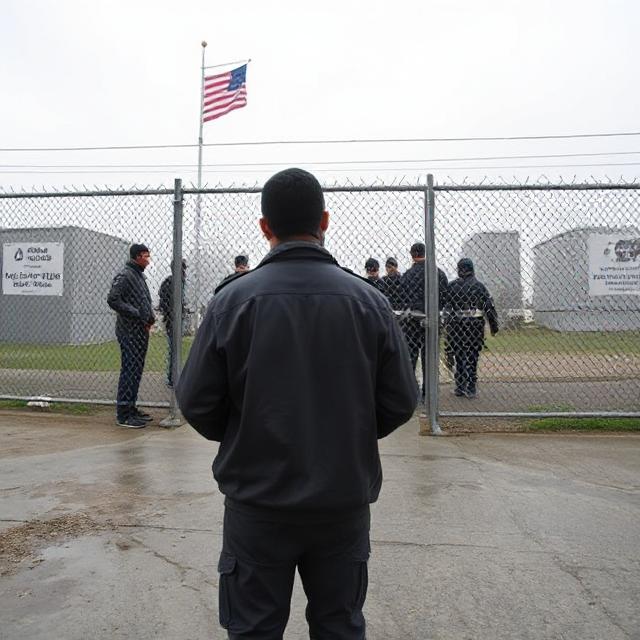
Category: west valley detention center

  • Your Complete Guide to the San Bernardino Inmate Locator

    Your Complete Guide to the San Bernardino Inmate Locator

    When someone has been arrested, the first thought that comes to mind is, “Where are they currently detained?” The prevailing stress of the situation often complicates the issue. In such cases, the San Bernardino inmate locator proves to be extremely helpful. This system provides vital information that assists family members, friends, and legal counsellors in managing visitations and understanding the inmate’s position in the correctional system. 

    jin88bet.one

    This article discusses inmate housing procedures, the workings of the San Bernardino inmate locator, and the regulations governing the placement of an individual in the county’s detention centres. 

    ak168app.baby

    Let’s get started. 

    ak168app.club

    Where are inmates detained in San Bernardino?

    Inmates in San Bernardino are predominantly detained in two types of facilities. Let’s have a look at them.

    Local Jails  

    City or county authorities, such as the San Bernardino County Sheriff’s Department, operate these short-term facilities. They house individuals waiting for trial or serving one-year or less sentences. Jails in San Bernardino also hold individuals for probation or parole violations, detainees awaiting transfer to other jurisdictions, and temporarily house juveniles, military, and those in protective custody.  

    ks168app.site

    State and Federal Prisons  

    These long-term facilities are managed by the State Department of Corrections or the Federal Bureau of Prisons. They hold individuals:

    ic88
    • Serving sentences longer than one year
    • Have a larger inmate population
    • Offer more specialised programs.  

    For both types of facilities, the Bureau of Justice Statistics (BJS) gathers and publishes information on inmate demographics, health care, rehabilitation programs, and other housed inmates, like journalistic prisoners, or the impacts of the COVID-19 pandemic.  

    Navigating the San Bernardino Inmate Locator  

    The San Bernardino inmate locator is a tool provided by the County Sheriff’s Department. It is an online search tool that enables you to find an inmate’s location and view relevant information regarding their custody status.

    ic88

    Users have access to the following functions using the inmate locator:    

    ic88

    – Inmates can be searched by their first and last name, and date of birth.

    ic88

    – Access to booking information, charges, and sometimes a mugshot is available.

    – Users can access the inmate’s current facility, which can be the Central Detention Centre, West Valley Detention Centre, or High Desert Detention Centre. 

    lr88

    It is noteworthy that the San Bernardino inmate locator does not include information on individuals who have been released, transferred, or are no longer in custody. 

    lr88

    Rules for Finding and Visiting an Inmate in San Bernardino County  

    The inmate locator must first be used to confirm their location to schedule a visit or a contact call with a person in custody. The following county-specific rules must be followed once the inmate is located:  

    • Visiting Appointments: These must be booked no less than one day in advance and can only be done through the county’s online system.
    • Online Access – The booking system is the same for all four main facilities within the county.
    • Information Accuracy: Users must search with the correct inmate name and date of birth to get the right results.
    • Custody Limitations: The search results may not include individuals serving brief sentences in a Division of Pretrial and Detention Services facility.

    Accessing the San Bernardino inmate locator before your visit will help save time, eliminate misinterpretations, and confirm compliance with the county’s regulations.

    lr88

    The Importance of the San Bernardino Inmate Locator

    Discovering that someone you care about has been detained in San Bernardino can be quite worrisome. However, the inmate locator can help provide relief during challenging moments. This platform enables swift and dependable access to essential information. For instance, it can help you engage in legal services, schedule a visit, or verify their whereabouts.

    lr88

    In just a few moments, you can:

    op88

    • Retrieve an inmate’s current facility and housing unit.

    • Eliminate the need to make exhaustive, time-consuming phone calls.

    si88

    • Retrieve pertinent booking details in time to facilitate court dates or visits.

    88v

    Conclusion 

    The San Bernardino inmate locator transcends search tool capabilities. It is an indispensable tool for maintaining information, contact, and readiness and helps improve the correctional experience for loved ones grappling with incarceration. When one grasps the system’s workings and adheres to the county instructions, there is less anxiety and more assurance to be gained.

    Having the right information is the first step toward taking the right actions if you or someone close to you is encountering legal problems in San Bernardino County. You can use the inmate locator to find out where they are, and then take the appropriate steps to assist and support them.

    SEXXXXX-VN

  • Top 17 Legal Defenses in West Valley, San Bernardino

    Top 17 Legal Defenses in West Valley, San Bernardino

    Facing criminal charges in West Valley, San Bernardino, is intimidating. However, the law states that arresting or accusing someone does not result in a conviction in all cases. California’s legal  framework offers a range of legal defenses to protect an individual’s rights, family, and life in cases of arrest, especially when defended by a seasoned criminal defense lawyer. 

    jin88bet.one

    17 notable defenses apply to individuals facing criminal charges in West Valley, San Bernardino. In this article, we will discover them. So let’s get straight to them. 

    1. Accident

    The law does not recognize all wrongful actions as criminal. For instance, committing an act involuntarily and not aiming to cause harm means the law should not consider you responsible. If the circumstances were due to a blunder or errors in judgment as opposed to an intentional disregard for safety, a defense of accident can be successfully argued by your lawyer in West Valley, San Bernardino.

    ak168app.baby

    2. Alibi 

    Having an alibi refers to being situated in a different place when a crime occurs. Evidence can validate your absence from the alleged offense. You can use evidence like flight records, receipts, security footage, or eyewitness accounts. In many criminal cases in West Valley, San Bernardino, an alibi forms a compelling part of the defense strategy. 

    ak168app.club

    3. Coerced Confession 

    There are strict protocols to be observed at each stage of the criminal process, including during the interrogation of suspects. If your admission of guilt may be considered invalid. This happens when it is the result of coercion, such as threats, lack of sleep, or deceit. In the West Valley San Bernardino region, cases of confessions obtained through coercion are quite common. Such confessions often result in not only the dropping of charges but also the statement being silenced in court. 

    ks168app.site

    4. Double Jeopardy  

    The principle of double jeopardy states that no individual shall be tried for the same crime more than once. A person cannot be retried for the same charge, even if new evidence comes to light, if they are acquitted or convicted of a charge in West Valley, San Bernardino

    5. Duress

    If your life or safety were threatened and you were compelled to commit a criminal act, that is known as duress. An example of this would be being compelled to commit robbery at gunpoint. This could be defended in West Valley San Bernardino courts under this legal principle, except for murder, which has a different standard. 

    ic88

    6. Entrapment 

    It is unlawful for law enforcement to apply pressure that would make you commit a crime that you would have otherwise not committed. If an undercover officer influenced or solicited you to participate in illegal conduct, particularly in sting operations, then you may be able to utilize the entrapment defense in West Valley San Bernardino. 

    7. False Accusation 

    There are numerous reasons a person can be accused, ranging from jealousy to vengeance, or even due to wrong identification. A defense attorney in West Valley, San Bernardino, can assist you in revealing the truth and in reinforcing your reputation by building a substantial case if you strongly feel that someone is falsely accusing you.

    ic88

    8. Insanity 

    The court may accept an insanity plea if your mental condition at the time of the incident was such that you were incapable of understanding the nature of your actions. This is most commonly proven through the M’Naghten Rule, and if successful, could lead to treatment rather than incarceration in West Valley San Bernardino. 

    ic88

    9. No Probable Cause 

    You cannot be arrested without probable cause. If such a reason was not present, a West Valley San Bernardino lawyer can defend against the arrest, and through a suppression motion, the evidence may be deemed inadmissible. 

    ic88

    10. Mistaken Identity 

    An innocent person can be arrested due to a resemblance to the actual perpetrator. Eyewitness mistakes are a primary reason for wrongful convictions in West Valley, San Bernardino, and with the assistance of a skilled defense attorney, such errors can be brought to light. 

    11. Mistake of Fact 

    Believing an item was yours and therefore taking it is an example of a mistake of fact. This defense can succeed in a number of West Valley San Bernardino property crime cases.

    lr88

    12. Necessity

    You could be excused under the necessity defense in situations where law-breaking was the only option to avoid significant harm. For instance, in West Valley San Bernardino, a person’s entry into a home to avoid injury is excused provided that there was no other option to access safety. 

    13. Parental Right to Discipline 

    The law in California permits parents to administer reasonable physical discipline. You could be exonerated if your conduct is found to be legal and reasonable and not involving child abuse. West Valley San Bernardino judges also take into consideration the circumstances in such cases. 

    lr88

    14. Police Misconduct 

    The prosecution’s case may be weakened by law enforcement’s illegal actions, such as evidence fabrication or the use of undue force. If your legal rights were breached in West Valley, San Bernardino, your counsel may attempt to file a motion to strike the evidence or dismiss charges on account of your legal rights. 

    lr88

    15. Self-Defense or Defense of Others 

    The use of force to protect oneself or another person from serious and imminent threats is exercised with legal justification. However, the force used should be reasonable. Laws on self-defense in West Valley, San Bernardino, protect your right to self-defense.

    16. Unconsciousness 

    According to the law, crimes committed during states of true unconsciousness, such as sleepwalking or epileptic episodes, legally qualify as unconsciousness. In the case of West Valley San Bernardino, this presumes the unconsciousness was not the result of self-induced intoxication. 

    lr88

    17. Intoxication (Voluntary or Involuntary) 

    Both self-induced and involuntary intoxication have legal implications. Intoxication rarely absolves responsibility or mitigates penalties, but it can influence intent, especially for lesser offenses. In West Valley, San Bernardino, if someone drugs you without your consent, this constitutes involuntary intoxication, which can serve as a complete defense. 

    op88

    Complete defenses rebut the prosecution’s case without any conditions. 

    si88

    Final Thoughts 

    Charges in West Valley, San Bernardino, do not require an individual to accept the consequences in full or receive a lengthy incarceration sentence. Many cases have the potential to be negotiated or altered through a well-crafted legal approach. Alibis, self-defense, or even a case of mistaken identity are just a few examples of the countless possibilities hidden behind perceived certainty. 

    In the case someone has been wrongfully accused, consulting a West Valley San Bernardino defense attorney familiar with the substantial intricacies of the local courts, judges, and prosecutors can be critical for shielding one’s freedom. Legal representation can significantly impact the outcome and become a determining factor in achieving freedom.

    88v

    Know More About:- What Are the Rights of a West Valley Inmate?

    SEXXXXX-VN


  • What Are the Rights of a West Valley Inmate?

    What Are the Rights of a West Valley Inmate?

    Incarceration does not amount to a total loss of personal liberty. West Valley inmates retain a core set of legal protections rooted in the U.S. Constitution. They are subject to reasonable institutional regulation. The correctional system has two jobs. The first is to keep order, and the second is to respect people’s rights. These two goals often clash. Inmates have the right to take legal action when their rights are violated. This does not depend on whether they have a lawyer or not.

    jin88bet.one

    This article will explore different rights of inmates. Let’s get started. 

    Constitutional Protections 

    Although confinement limits certain personal liberties, the Constitution continues to travel with the inmate. In Turner v. Safley, the Supreme Court clarified that institutional rules may circumscribe inmate liberties only where the restriction advances a legitimate and neutral correctional objective. The Turner Test applies to courts and assesses the validity of such regulations. It consists of the following four inquiries:

    ak168app.baby

    1. Whether the regulation furthers a legitimate governmental interest.

    2. Whether inmates retain alternative channels to exercise the affected right.

    3. The significance of the right’s exercise with the security, order, and resources of the institution.

    4. The availability of less restrictive means of achieving the same end.

    ak168app.club

    Common rights that remain in operation include:

    • The liberties of speech and expression
    • The free exercise of religion
    • The guarantee of due process in disciplinary actions
    • Protection against Cruel and Unusual Punishment

    All West Valley inmates are protected from cruel and unusual punishment by the Eighth Amendment. The courts will find a violation when:

    ks168app.site
    • Correctional staff apply force that is grossly out of proportion to the security need.
    • The prison system withholds life-sustaining necessities such as nutrition, shelter, or hygiene.
    • Prison officials exhibit “deliberate indifference” to the risk of serious injury or serious illness.

    A successful claim must meet both the objective test (the injury is sufficiently serious) and the subjective test (the official was aware of and disregarded the risk).

    Due Process Rights

    The Fifth and Fourteenth Amendments continue to govern the rights of West Valley inmates, imposing due process requirements. Inmates are entitled to:

    ic88

    •     Receive written notice of the charges prior to any disciplinary action.

    •     Present relevant evidence and to call witnesses.

    ic88

    •     Be adjudicated by a neutral and detached decision maker.

    •     Obtain a brief and generalized written statement of the reasons for the decision.

    Due process protections are heightened when the penalty requires segregation or the forfeiture of good-time credits.

    ic88

    Right to Legal Help and Access to Courts

    The ruling in Bounds v. Smith affirms that inmates must have access to the judiciary. A West Valley inmate is guaranteed the right to:

    • Meet with legal counsel.
    • Communicate with their attorney in a manner that preserves confidentiality.
    • Access to legal resources within the facility.

    This provision allows inmates to present their cases effectively to ensure a measure of accountability for institutional treatment.

    ic88

    Religious Freedom in Custodial Settings

    The First Amendment, reinforced by the Religious Land Use and Institutionalized Persons Act, guarantees a West Valley inmate the unimpeded practice of their faith. Correctional authorities are required to facilitate:

    • Scheduled access to worship services and visiting clergy.
    • Retention of sacred texts and religious objects will be used in the absence of proven security risks.
    • Availability of prescribed religious diets, including halal, kosher, or vegetarian options.
    • The right to grooming and clothing of obligatory faith, such as beards or religious head coverings. This is allowed unless there’s a strong security reason to change it.

    Any resulting limitation must be the least onerous means by which to achieve a compelling penal objective.

    lr88

    Medical Care and Health Rights

    The state is obligated to provide West Valley inmates with constitutionally adequate medical treatment in accordance with the Eighth Amendment. This entitles the inmate to:

    • Care for both chronic and acute medical conditions.
    • Diagnosis and treatment of mental health disorders.
    • Provision of medications that have been prescribed by licensed health professionals.

    Failure to address a serious medical need may constitute a violation of constitutional duty. However, medical errors that do not constitute intentional or grossly negligent conduct are more appropriately classified as state torts rather than constitutional claims.

    lr88

    Protection Against Discrimination

    Discrimination is categorically barred throughout the correctional system. Any inmate at West Valley is shielded by:

    •     The Equal Protection Clause of the Fourteenth Amendment. 

    •     Title VI of the Civil Rights Act of 1964 (prohibiting discrimination based on race, color, or national origin). 

    lr88

    •     The Americans with Disabilities Act (protecting inmates with disabilities). 

    •     The Prison Rape Elimination Act (guaranteeing safety and rights of LGBTQ+ inmates). 

    Recent federal and circuit court decisions have expressly affirmed that the Eighth and Fourteenth Amendments require the provision of gender-affirming healthcare to transgender inmates. 

    lr88

    How a West Valley Inmate Can Assert Their Rights?

    Step 1: Follow Grievance Procedures 

    A West Valley inmate is required to complete the prison’s internal grievance process before initiating a federal lawsuit. This generally involves: 

    op88

    •     Submitting a formal written complaint. 

    •     Receiving a written response from prison officials. 

    •     Appealing the response if the claim is denied. 

    Strict deadlines and procedural rules govern this process. A failure to abide by them may cause litigation later. 

    si88

    Step 2: File a Lawsuit or Habeas Corpus 

    After using internal remedies, the inmate has the right to: 

    • Commence a civil rights lawsuit alleging constitutional violations. 
    • Initiate a habeas corpus petition contesting the lawfulness of the conviction or sentence. 

    Statutory timelines for both actions are strictly enforced; if missed, the case may be dismissed regardless of the underlying merits.

    88v

    Legal Support for Inmates

    West Valley inmates technically have the right to handle legal matters on their own, but having a professional lawyer can make a big difference. Groups like the ACLU and the National Lawyers Guild often step in to help when an inmate’s rights are being violated. Moreover, the facility’s law library and the support of fellow inmates with legal know-how can be incredibly helpful in understanding the rules and processes involved.

    SEXXXXX-VN

    Conclusion 

    Being jailed doesn’t mean you lose your basic constitutional rights. You still have the right to practice your religion, receive proper medical care, be treated fairly in disciplinary actions, and not face discrimination. But it’s important for inmates to understand their rights and know how to protect them. This can be through many ways, like filing complaints, taking legal action, or getting help from a lawyer. This is key to making sure people are treated with dignity and fairness, even behind bars.

    Know more about:- Proposition 36: California’s Shift Toward Stricter Sentencing and the Future of Criminal Justice Reform


  • Proposition 36: California’s Shift Toward Stricter Sentencing and the Future of Criminal Justice Reform

    Proposition 36: California’s Shift Toward Stricter Sentencing and the Future of Criminal Justice Reform

    California has always been one of the first states in the country to attempt reform within the criminal justice system. It has evolved through major shifts in public opinion and legislation.

    Due to the ever-growing prison population and the need to maintain public safety, voters have recently begun looking for propositions that can substantially reform the system. 

    jin88bet.one

    One of the recent propositions is Proposition 36, which aims to amend parts of Proposition 47 by bringing back stricter regulations on repeat offenders. Essentially, it would mean classifying non-violent offenses like theft as misdemeanors for individuals with past felony convictions.

    ak168app.baby

    In this article, we will discuss the ongoing criminal debates in California while focusing on the effects of Prop 36 and how it helps direct the conversation toward safety and fairness in sentencing.

    The Development of the Criminal Justice System in California  

    In order to really understand Prop 36, it’s beneficial to know the history of the approach that the state took in regard to crime and punishment. It has transformed from a tough-on-crime to a more forgiving policy focusing on rehabilitation.  

    From Brutal Offenses To More Liberal Offenses  

    A major change happened in California in the 1990s. This was when they created the “Three Strikes Law”, which aimed at punishing repeat offenders heavily. This law increased the population within the prisons which led to overcrowding and a burden on the state due to its high costs.  

    ak168app.club

    The societal and financial costs of mass incarceration became clear, leading to changes in the public support for these laws that were considered too harsh. The attempts to reform aimed at reducing incarceration and granting more freedom focused primarily on racial discrimination, harsh sentences, and brutal prison conditions.  

    Proposition 47 in 2014 and Proposition 57 in 2016 marked significant steps toward reforming the system. Both propositions aimed at increasing access to early parole in exchange for participating in rehabilitation programs while also reducing the sentence time for certain nonviolent crimes.

    ks168app.site

    The Progress Toward Proposition 36: Change, Backlash, and Discussion  

    Under Prop 47’s new policy, certain offenses like drug possession and petty theft would no longer be considered felonies, thereby reducing the prison sentences for nonviolent offenders.  

    ic88

    Later on, Prop 57 encouraged the rehabilitation of inmates by expanding parole eligibility and motivating them to follow certain paths in order to reduce their sentence.  

    While some people welcomed these changes as steps toward a fair system and an improved justice policy, they came under fire for a number of other reasons. Strained policing services and some residents argued that the leniency had resulted in increased property crimes and that habitual offenders were being enabled. This criticism would help set the stage for Prop 36.   

    Remaining Challenges for California’s Justice System  

    Regardless of the changes made, the state continues to deal with persistent issues, further complicated by prison overcrowding, and plagued with facilities well beyond their intended capacity.

    The issue of recidivism, the act of committing crimes after being released, is also dangerously high. These factors greatly undermine the effectiveness of rehabilitation-focused sentencing strategies.

    ic88

    What does Proposition 36 aim to change?

    Proposition 36 seeks to change sentencing regulations for people with multiple serious or violent offenses. Supporters believe an alleged loophole in Proposition 47 that permits repeat offenders to evade punishment needs to be fixed.  

    The intent is to enhance safety by discouraging habitual offenders through restoring felony classifications for specific repeat offenses. Some critics warn this could reverse progress made toward reducing incarcerations in the state, while others argue it would not resolve the underlying causes of crime and would simply put back a more punitive approach.   

    ic88

    Revisiting Prop 47 – The Core of the Debate  

    Proposition 47 is often recognized as an innovative attempt to decrease prison populations by reclassifying certain crimes. It assisted thousands by shortening their sentences or avoiding prison altogether. It was indeed celebrated and acknowledged as a practical and progressive step towards reform.  

    ic88

    However, this was also met with controversy as it became increasingly difficult to manage repeat offenders. Due to the loophole Prop 47 created, some offenders faced only a slap on the wrist for serious offenses, and because of this, major cities saw an increase in property crimes.   These frustrations led to the creation of Proposition 36.  

    The Legal Effects of Proposition 36  

    lr88

    Proposition 36 signals a shift back to stricter sentencing policies as the state would once again felony charge certain repeat offenses. Such actions would demonstrate the state’s message of zero tolerance to habitual offenders.  

    Supporters of this measure argue that it would enhance public safety by removing chronic offenders from the streets. However, there is fear among opponents that it could reverse the progress made in California, focusing on rehabilitation instead of incarceration.  

    This conflict of feeling stuck between punishment and the opportunity for second chances is what many consider the main framework of the debates surrounding the justice system in the state of California. Many are concerned that Prop 36 would increase the rate of mass incarceration without deeper underlying considerations of mental health, addiction, and poverty.   

    lr88

    California’s Justice System Other Legislative Activities  

    California is not the only state that is working on Prop 36. There are other legislative activities and proposals underway in efforts to work on significant issues in the justice system.  

    Senate Bill 81 (SB 81)  

    This bill focuses on non-violent crime sentence enhancement and seeks to limit it. Adding years to a sentence based on prior offenses has historically made prison terms far too long.

    lr88

    Judges are able to dismiss specific enhancements concerning aggravating factors trauma or mental illness SB 81. This is part of a wider effort to revise strict sentencing policies and promote rehabilitation. 

    Senate Bill 94 (SB 94) 

    For individuals sentenced to a life term with no possibility of parole, SB 94 offers a “second look” provision. This applies to those who are under the age of 25 at conviction and have served a minimum of 25 years.

    The bill aims to address the fact that long sentences are often unjust and hinder the possibility of rehabilitation. It supports the notion that people change for the better and deserve the opportunity to demonstrate that.

    lr88

    Navigating California’s Unique Justice System

    What makes California stand out is the use of ballot initiatives that drive the criminal justice system. This gives our citizens the opportunity to actively participate in shaping laws for the better. However, it also results in sudden and extreme changes driven by public opinion. 

    op88

    The state is known to oscillate between harsh and aggressive crime policies and progressive reform. This tends to balance and reflect the values of voters over time.

    Although measures like Prop 47 and 57 marked a softer, reform-first approach, the re-emergence of stricter proposals like Prop 36 indicates that many voters still favor tough penalties for repeat offenders.

    Change through votes has both positive and negative aspects. There is an opportunity for advancement, but there is a danger of a backward slide if the public’s attitude changes.

    si88

    Conclusion: What Is the Future of Justice in California?

    California is in a peculiar situation. On the positive side, it has made tremendous progress in reducing over-incarceration and shifting focus to rehabilitation. On the negative side, the relentless crime and high recidivism rates have resulted in renewed demands for more stringent laws.

    88v

    Proposition 36 is more than a policy. It is a litmus test of California’s criminal justice principles. Does the state persist on the path of reform, or does it abandon reform altogether and resort to inflicting harsh punishment to achieve so-called public safety?

    The new proposition is pivotal in shaping not just the justice system, but also the communities, families, and individuals caught in the cycle of crime and punishment for decades to come.

    As California contemplates these choices, the state must ask itself how justice is best served. Is it through rehabilitation, deterrence, or a combination of both?

    Read About:- Examining the Problem of Overcrowding: What’s Causing Jails in the U.S. To be Overcrowded?


    SEXXXXX-VN